

Pranayama, the ancient yogic practice of breath control, directly regulates the body’s parasympathetic nervous system to lower stress, enhance lung capacity, and improve cardiovascular health. By consciously altering the depth, rhythm, and speed of your breath, you manipulate the flow of prana (vital energy) to restore physical and emotional balance.




🧠 Mental & Emotional Benefits
- Decreases Chronic Stress: Slow breathing patterns lower cortisol production and soothe the central nervous system.
- Reduces Anxiety: Modulates neural networks in the amygdala and prefrontal cortex involved in emotional processing.
- Improves Sleep Quality: Activates cooling, tranquilizing pathways that combat insomnia and promote deep sleep.
- Sharpens Cognitive Focus: Mindful breath regulation increases attention span, memory retention, and executive function.
🫁 Physical & Physiological Benefits
- Enhances Lung Function: Strengthens respiratory muscles, increases vital lung capacity, and helps manage asthma symptoms.
- Lowers Blood Pressure: Slow-paced pranayama reduces hyper-arousal, directly lowering high blood pressure and heart rate.
- Boosts Immune Response: Clinical trials indicate that structured breath retention reduces system-wide inflammation.
- Aids Digestion: Dynamic stomach breathing techniques stimulate digestive organs and boost metabolic efficiency.
🧘 Scientific Benefits of Specific Techniques
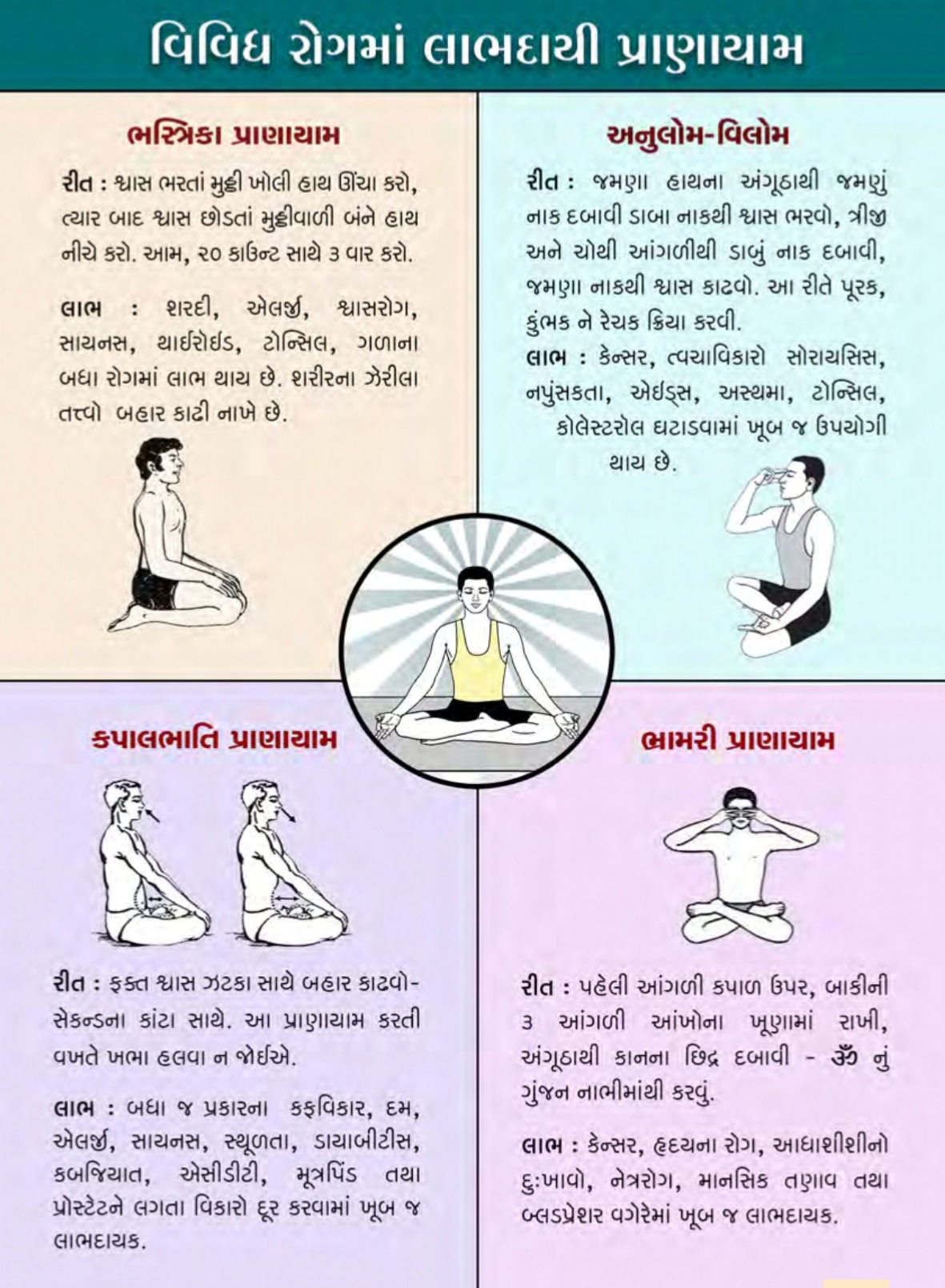
- Nadi Shodhana (Alternate Nostril Breathing): Restores balance between the left and right brain hemispheres to induce instant mental clarity.
- Bhramari (Humming Bee Breath): Generates a soothing acoustic vibration that activates the vagus nerve to calm extreme agitation.
- Sheetali (Cooling Breath): Reduces physical body heat, cools emotional anger, and helps pacify a racing mind.
- Kapalbhati (Skull Shining Breath): Uses rapid diaphragmatic exhalations to clear toxins, energize the system, and wake up the brain.
Imporatant links
અનુલોમ વિલોમ ના ૨૧ ફાયદાઓ: અહીં ક્લિક કરો
For an in-depth clinical analysis of these physiological changes, you can read the comprehensive medical overview provided by the National Institutes of Health (PMC).